Tweeters MUST have high pass lters!
Tweeters are designed only to play high frequencies and will be damaged if they are driven with too much power at low frequencies. A high pass lter is the device we use to
prevent this damage.
We have included a simple high pass lter with your Audiofrog tweeters. Depending on your system design, you may or may not need to install them.
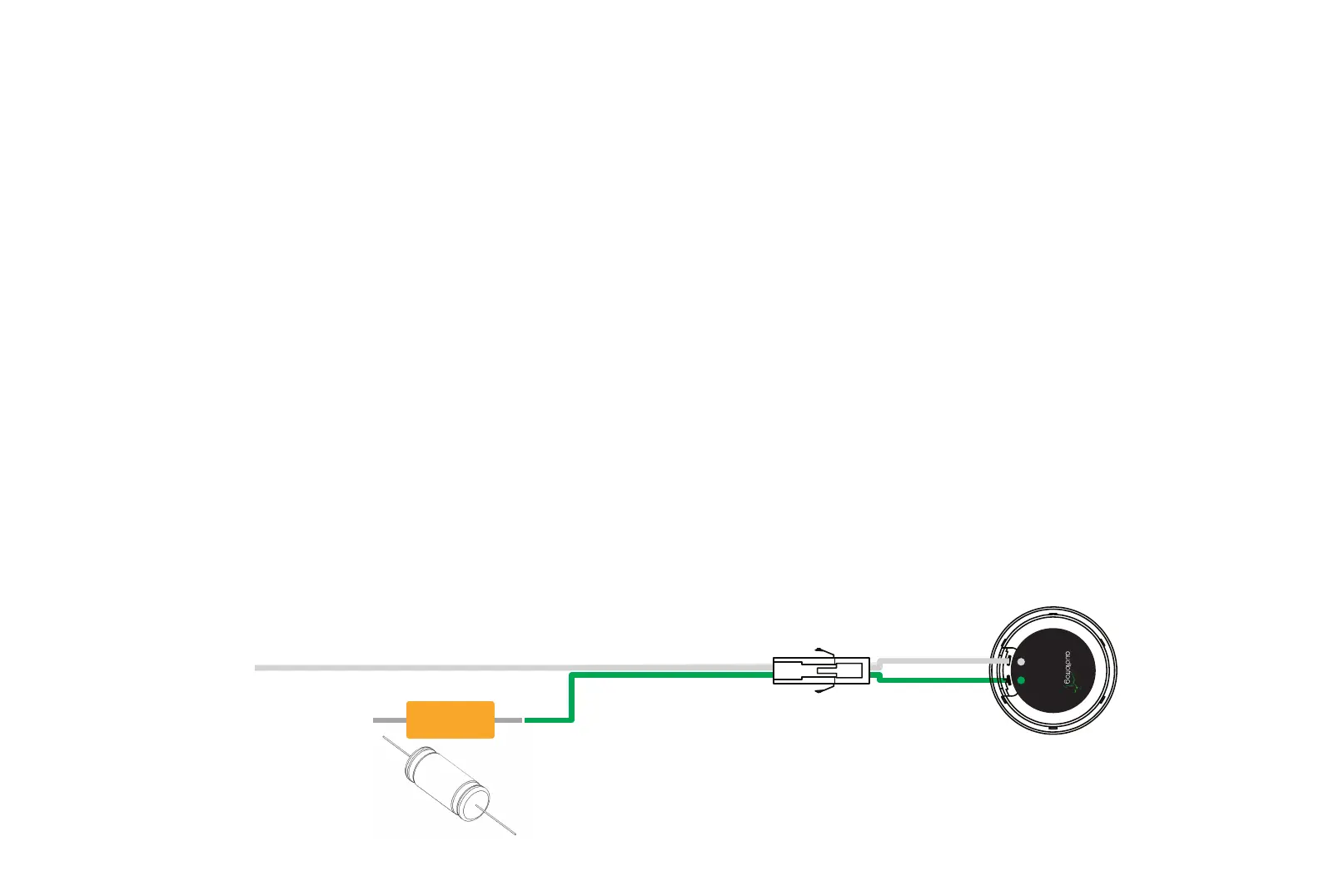
1. If you are replacing the tweeters in your factory system and will continue to use the factory-supplied amplier (which may be a separate amplier or it may be the amplier
included in the radio), your factory tweeters will probably have a similar device mounted to its magnet or housing. When you install your new Audiofrog tweeter, be sure to install
the included capacitor. See the diagram below.
2. If you are installing an amplier and a separate passive crossover (i.e. GS610C or GS410C), then you do not need to install the lter we have included with your tweeters.
3. If you are installing an amplier that includes an active crossover for your tweeter (i.e. a 4-channel amplier that will drive your midrange speakers and your tweeters each on a
single channel) set the amplier’s crossover according to the included instructions for your tweeter. If you will be using a 12dB/octave crossover instead of a 24dB/octave
crossover, raise the crossover frequency by 1kHz above the 24dB/oct recommendation.
4. If you are installing an amplier and a digital signal processor (DSP) and the DSP will provide the crossover, set the slope to 24dB/oct and the frequency according to the
instructions included with your tweeter.
If #3 or #4 best describes your system design, consider using a tweeter protection circuit to prevent your tweeter from being damaged by erroneous settings or a failed
component. Consider a pair of Audiofrog TP50v2 tweeter protectors. These will protect your tweeter from too much power at low frequencies but will not adversely aect their
performance when used with an active crossover in an amplier or a DSP.
To Amplier -
To Amplier +