INSTALLATION INSTRUCTIONS
S A V E F O R F U T U R E U S E
Product names listed herein are trademarks of AS America, Inc.
7302029-100 Rev. D (10/17)
RECOMMENDED TOOLS AND MATERIALS
Most of the procedures require the use of common tools and materials, which are available from hardware and plumbing
supply stores. It is tessential that the tools and materials be on hand before work is begun.
Thank you for selecting DXV. To ensure this product is installed properly, please read these instructions carefully before you begin.
(Certain installations may require professional help.) Also be sure your installation conforms to local codes.
CAUTION: PRODUCT IS FRAGILE. TO AVOID BREAKAGE AND POSSIBLE INJURY HANDLE WITH CARE!
NOTE: Pictures may not exactly define contour of china and components.
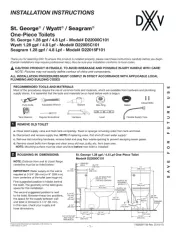
St. George 1.28 gpf / 4.8 Lpf - Model# D22000C101
Wyatt 1.28 gpf / 4.8 Lpf - Model# D22005C101
Seagram 1.28 gpf / 4.8 Lpf - Model# D22015F101
Level Flexible Supply Tube
a. Close toilet supply valve and ush tank completely. Towel or sponge remaining water from tank and bowl.
b. NOTE: Disconnect and remove supply line. If replacing valve, first shut off main water supply!
c. Remove old mounting hardware, remove toilet and plug oor waste opening to prevent escaping sewer gases.
d. Remove closet bolts from ange and clean away old wax, putty, etc. from base area.
NOTE: beforeMounting surface must be clean and level new toilet is installed!
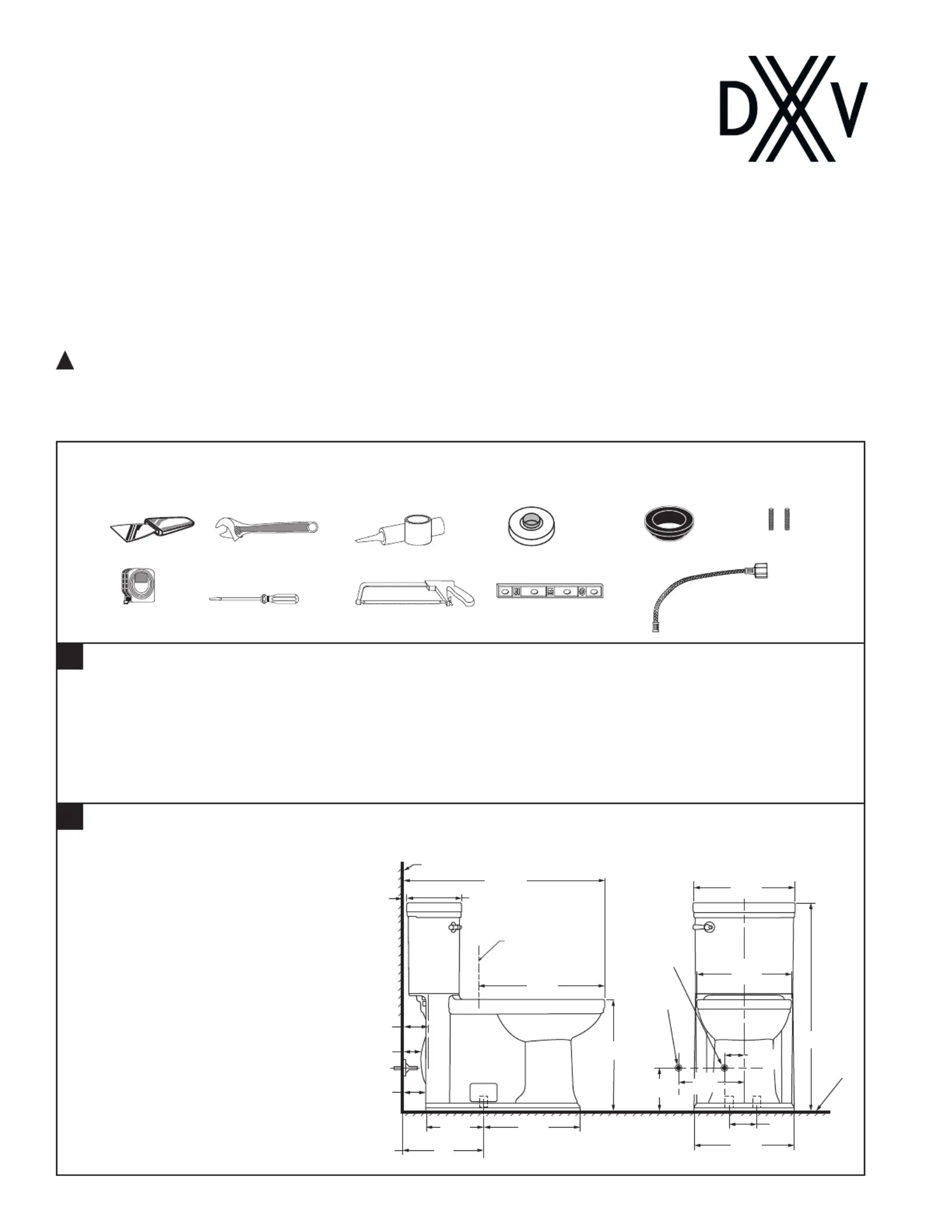
NOTE: Distance from wall to closet flange
centerline must be as listed below:
IMPORTANT: Water supply on the wall is
required at 3-3/4" (95 mm) or 9" (299 mm)
from centerline of the toilet (see rough-in).
First suggested position is hidden behind
the toilet. The geometry of the toilet gives
space for this installation.
The second suggested position is next
to the toilet. Between these two positions,
the space for the supply between wall
and toilet is limited to 3-1/4" (95 mm).
In this case, check your supply and
ROUGHING-IN DIMENSIONS: St. George 1.28 gpf / 4.8 Lpf One-Piece Toilet
ALL INSTALLATION PROCEDURES MUST COMPLY IN STRICT ACCORDANCE WITH APPLICABLE LOCAL
PLUMBING AND BUILDING CODES