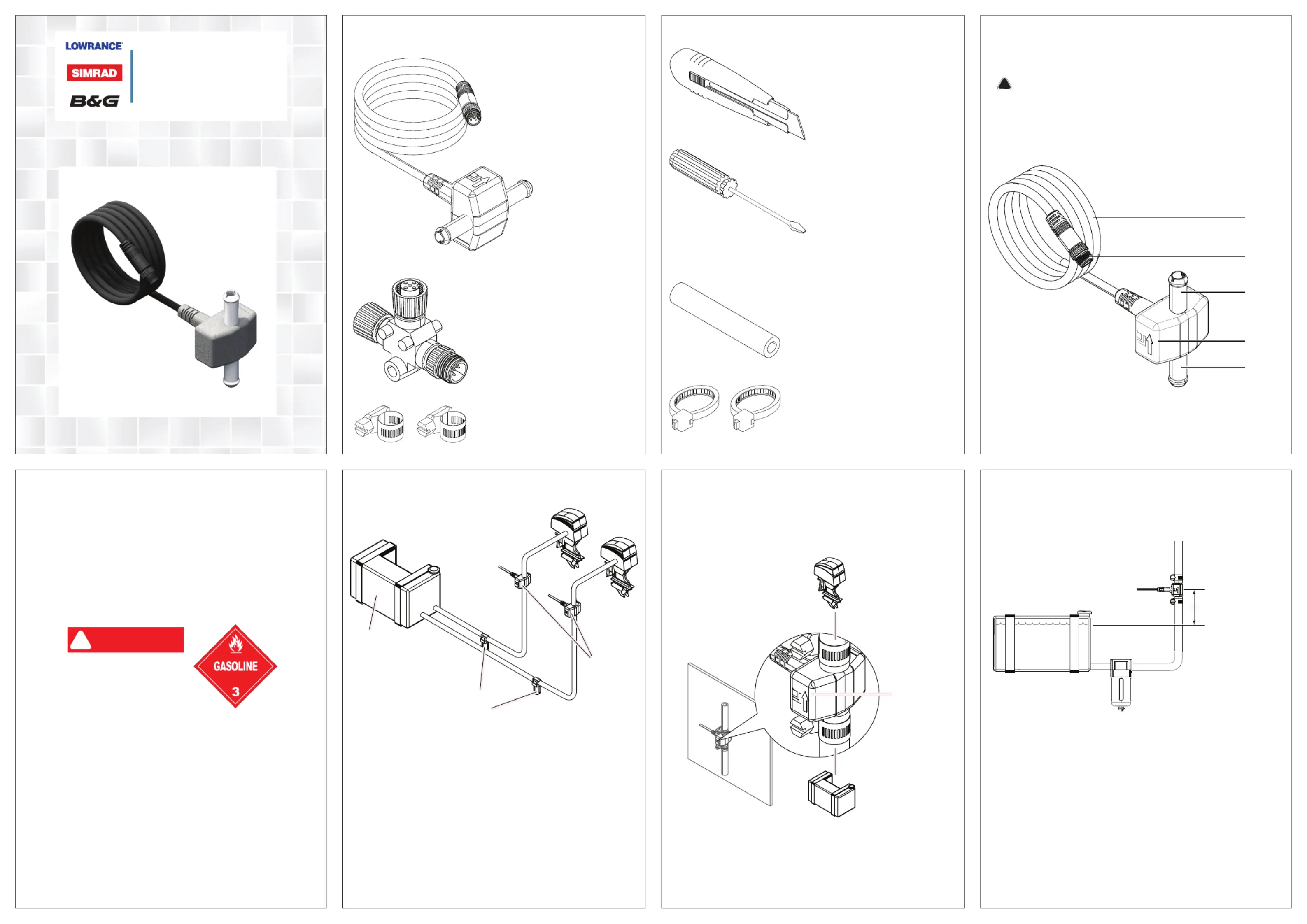
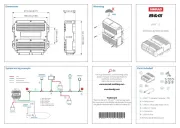
Use one Fuel Flow Sensor for each engine
Mount to vibration free surface with the flow direction arrow
Mount as close as possible to the fuel tank
Mount the sensor above the tank’s maximum fuel level to avoid
accidental fuel leakage in case the sensor becomes disconnected.
Sharp knife for cutting fuel line
Screw driver for tightening hose
The Fuel Flow was designed to fit a
typical 3/8” SAE USCG Type A1 fuel
hose. If your engine has different
diameter hoses or metal fuel lines,
a section of 3/8” fuel line must be
installed between the sensor and the
Stainless steel hose clamps
Cable ties for securing Fuel Flow
The Fuel Flow Sensor is a device for measuring the flow rate of fuel
for gasoline powered boats.
The Fuel Flow Sensor is designed for gasoline engines
The Fuel Flow Sensor does not operate diesel engine fuel sys-
tems, or on any fuel system with a return fuel line or sump.
D Fuel Flow sensor: Arrow indicates fuel flow direction
C Fuel line connector (3/8”): To engine
E Fuel line connector (3/8”): From tank
A Fuel Flow sensor: Arrow indicates fuel flow direction
B Fuel Filters: One before each fuel sensor
Before commencing the installation
Gasoline is extremely ammable. If possible, drain the fuel
line before you start or shut any ow valves located at the
tank. Keep sparks and ame away from the work area. After
installation, remember to clean up any spilled fuel.
You must install an in-line fuel lter between the tank and the
Fuel Sensor sensor. This will prevent a malfunction caused
by contaminated fuel. Debris in unltered fuel can clog the
sensor’s turbine and result in rough performance or engine
As with any fuel system, we recommend you always carry
onboard a spare fuel lter and an in-line (3/8”) splice barb.
This allows you to remove a clogged Fuel Sensor or fuel lter
and restore engine operation if the fuel lter fails. We strongly
recommend that you inspect your entire fuel system at regular