CAUTION: To reduce the risk of electric shock,
No user serviceable parts inside.
Refer servicing to qualied service personnel.
This symbol indicates that dangerous
voltage constituting a risk of electric
shock is present within this unit.
This symbol indicates that there are
important operating and maintenance
instructions in the literature accompanying
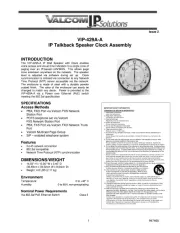
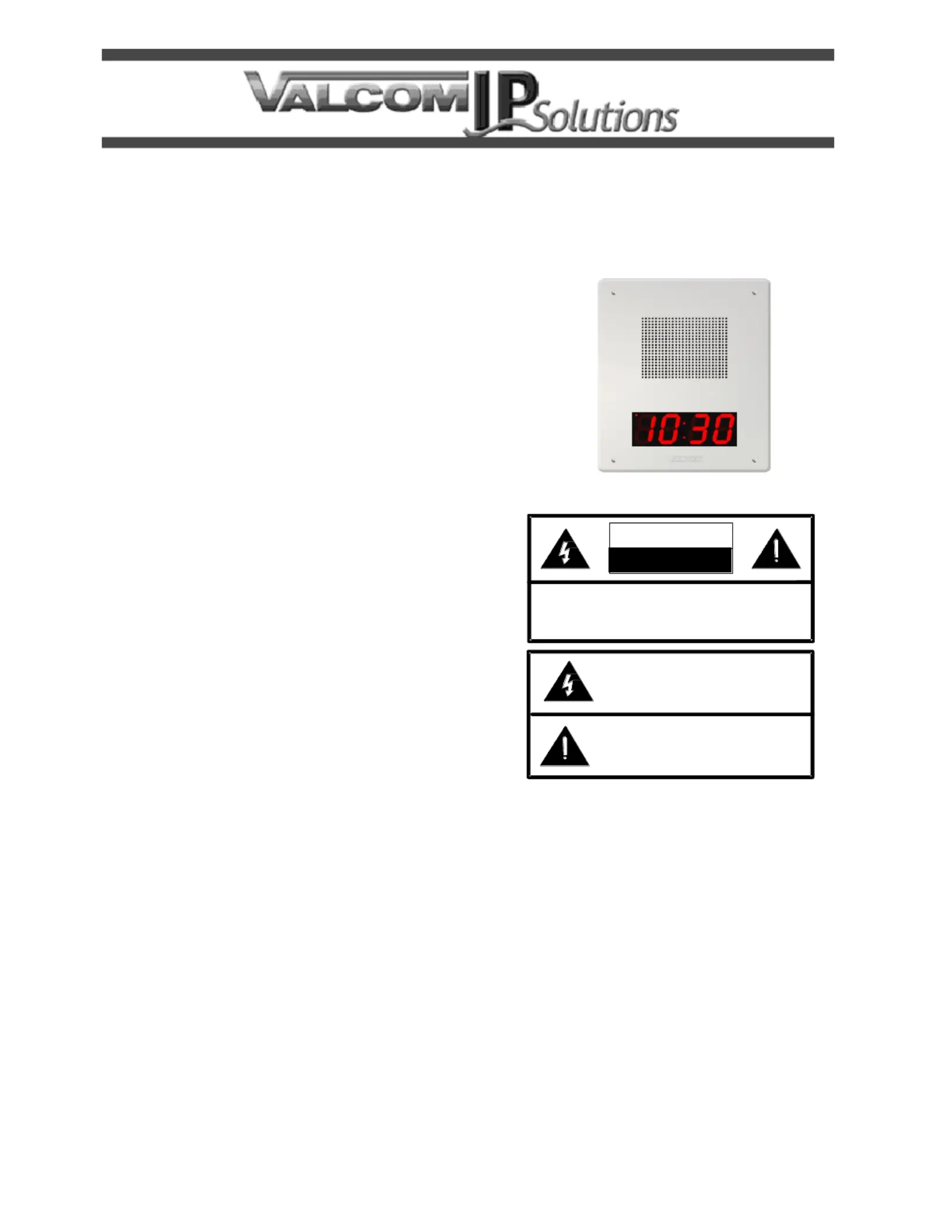
IP FLUSH MOUNT SPEAKER/CLOCK ASSEMBLY
The VIP-4 A-D IP Wall Speaker with Clock enables 29
voice access and visual time indication to a single zone of
paging over an IP-based LAN/WAN. This allows page
zone extension anywhere on the network. The speaker
level is adjusted via software during set up. Clock
synchronization is initiated via connection to any Network
Time Protocol (NTP) server accessible via the network.
The enclosure is made of steel with a durable powder
coated nish. The color of the enclosure can easily be
changed to match any decor. Power is provided to the
VIP-4 A-D via a Power over Ethernet (PoE) switch 29
meeting the 802.3af specication.
• PBX, FXO Port using a VIP- 811
• POTS telephone set using a VIP-811
• PBX, FXS Port using a VIP- 821
• Valcom M Cast Page Group
• –SIP enabled telephone system
-45 network connection RJ
Network Time Protocol (NTP) synchronization
Four digit time display
. 3.14 50” H x 1 00” W x 3.40” D
( . cm x 33. cm W x 8.64cm D) 36 93 02
Weight: 4.8 LBS (2 7 kg) .1
Humidity: 0 to 85% non-precipitating
Nominal Power Requirements
Via 802.3af PoE Ethernet Switch: Class 3
Precautionary Designations
This equipment has been tested and found to
comply with the limits for a Class A digital
device, pursuant to Part 15 of the FCC Rules.
These limits are designed to provide reasonable
protection against harmful interference when
the equipment is operated in a commercial
environment. This equipment generates, uses
and can radiate radio frequency energy and if
not installed and used in accordance with the
instruction manual, may cause harmful
interference to radio communications.
Operation of this equipment in a residential area
may cause harmful interference in which case
the user will be required to correct the
interference at his own expense.