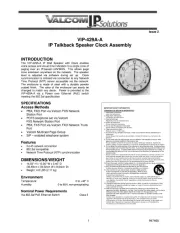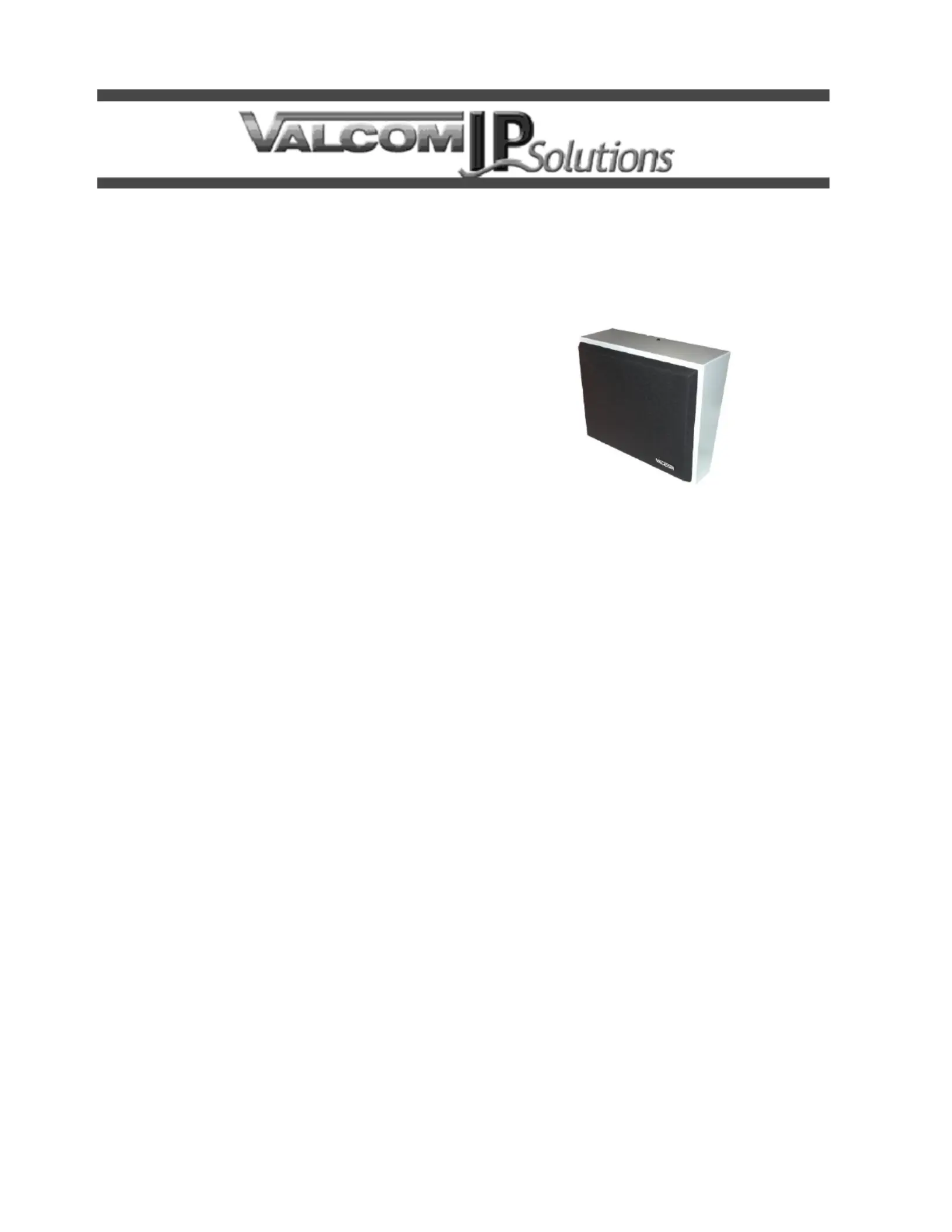
The VIP-4 A Wall Speaker enables 30 IP
handsfree talkback access to a single location
over -based LAN/WAN. This allows an IP a
handsfree talkback extension anywhere on the
network. The speaker levels are electrically
adjusted during setup. The enclosure made of is
steel with a durable gray powder coated finish.
The color of the enclosure can easily be changed
to match any decor. A detachable black clothe
grille is included. A call switch input is provid ed
for the remote speaker location signaling.
Power is provided to the VIP- A via a Power 430
over Ethernet (PoE) switch meeting the 802.3af
- for network connection RJ 45
Power over Ethernet (PoE) 802.3af
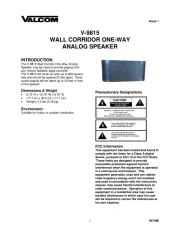
10.13” H x 12.31” W x 4.63” D
(25.73cm x 31.27cm W x 11.75cm D)
Weight: 4. LBS (1.91 kg) 53
Nominal Power Requirements
Via 802.3af PoE Ethernet Switch: Class 3
PSE (Power Sourcing Equipment) to be
compliant to IEEE 802.3af
Humidity: 0 to 85% non-precipitating
These products are intended for use with a UL
Listed power source marked “Class 2” or “LPS”
rated 24VDC, or 48VDC (PoE).
PoE and all interconnected ITE are intended for
Precautionary Designations
WARNING-To Reduce The Risk Of Fire Or
Electric Shock. Do Not Expose This
Apparatus To Rain Or Moisture.
• AVERTISSEMENT - An de réduire les
risques d'incendie ou de décharge
électrique, évitez d'exposer le système à la
• Apparatus shall not be exposed to dripping
or splashing and no objects lled with
liquids, such as vases, shall be placed on
• des L’appareil ne doit pas être exposé à
égouttements et éclaboussures et aucun
Objet Rempli de liquide, comme vase, ne
doit être placé sur l’appareil.
This equipment has been tested and found to
comply with the limits for a Class A digital
device, pursuant to Part 15 of the FCC Rules.
These limits are designed to provide
reasonable protection against harmful
interference when the equipment is operated
in a commercial environment. This
equipment generates, uses and can radiate
radio frequency energy and if not installed
and used in accordance with the instruction
manual, may cause harmful interference to
radio communications. Operation of this
equipment in a residential area may cause
harmful interference in which case the user
will be required to correct the interference at